
A brand name that looks available is not necessarily clear of trademark conflicts.
Looking beyond exact matches is essential: a trademark search lawyer evaluates names, logos, and slogans for similarity, considers the goods or services associated with each mark, and determines whether an initial knockout search is enough or a deeper review is appropriate. Similar wording, sound, appearance, or meaning may matter when customers encounter related offerings.
This guide explains what a trademark search can reveal, how the right level of review depends on your brand and its goods or services, and how federal trademark protection extends throughout the United States. It also distinguishes identifying a potential conflict from assessing what it means before you invest in a name, logo, or slogan.
Key Takeaways
- Assess names, logos, and slogans as separate brand assets, since each can raise different availability questions.
- Search depth should reflect the proposed mark and the goods or services connected to it.
- Look beyond exact matches: similarities in wording, sound, appearance, or meaning can signal potential conflicts.
- Understand how federal registration can extend trademark protection throughout the United States before committing to a brand.
Brand name, logo, and slogan protection
Your brand name, logo, and slogan are distinct assets. Each can identify the source of your goods or services in the United States, but each raises different search questions. A name such as “Northstar” may conflict with similar wording. A logo search considers visual elements, while a slogan search examines phrasing and meaning. A clear result for the name does not establish that every brand element is available.
A trademark search lawyer considers how customers may encounter a mark alongside related goods or services. The review looks beyond exact matches: similar sound, appearance, wording, or meaning can matter. A spelling change, for example, may not resolve a concern if customers could still confuse the brands. This matters before filing because a confusingly similar mark may face registration denial or create infringement risk.
Federal registration and marketplace use are related but distinct parts of brand protection. A federal trademark registration provides protection throughout the United States, while rights can also develop through conducting business under particular words, names, symbols, or devices. A careful review therefore considers the mark and its commercial context, not just whether the exact phrase appears in a database.
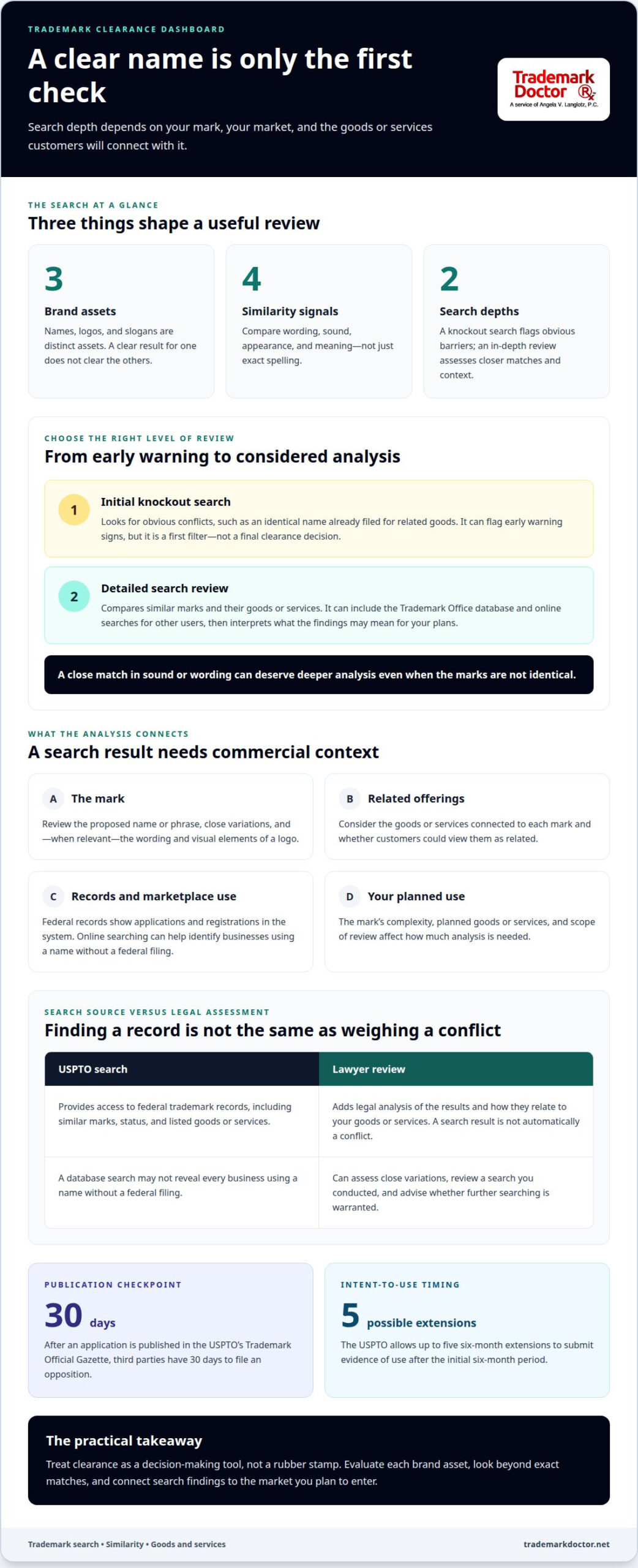
Filing also begins a public examination process. According to the U.S. Patent and Trademark Office, third parties have 30 days to file an opposition after a trademark application is published in the USPTO’s Trademark Official Gazette. An opposition can challenge registration, so publication is a meaningful checkpoint for your brand plans.
If you have not started using a mark, an intent-to-use application may fit your plans. According to the U.S. Patent and Trademark Office, it allows up to five six-month extensions to submit evidence of use after the initial six-month period. The mark still needs careful review before filing.
A trademark attorney can assess how each asset fits your business plans and identify concerns before launch. A name, symbol, and slogan may need separate evaluations, especially when they appear together on packaging, websites, or advertising. A focused review helps you decide what to protect and when to proceed.
Knockout searches and in-depth searches
A preliminary knockout search can flag obvious barriers before a full search report. The appropriate depth depends on your proposed mark and related goods or services.
Initial Knockout Search
A knockout search looks for obvious conflicts, such as an identical name already filed for related goods. It can flag early warning signs before you invest further in a brand. But it is a first filter, not a final clearance decision. A close match in wording or sound may warrant deeper analysis even when the marks are not identical.
Detailed Search Review
An in-depth review compares the proposed mark with similar marks and the goods or services associated with them. A trademark search lawyer can assess whether differences in spelling, sound, meaning, or commercial context lessen or heighten concern. The review can include the Trademark Office database and online searches for other users. The goal is to interpret relevant findings, not simply provide a list of names.
Lawyer Search Versus USPTO Search
A USPTO search provides access to federal trademark records; a lawyer adds legal analysis of the results and their relationship to your goods or services. That distinction matters because a search result is not automatically a conflict, and an exact-name search may miss similar marks. A lawyer can also review a search you conducted yourself, assess what the results show, and advise whether further searching is warranted. A consultation can focus on your mark, planned use, and any concerns you found.
Clearance Search Scope
A full clearance search considers more than one database result. The scope can include the proposed name or phrase, similar marks, the relevant goods or services, and online use by other businesses. A logo may also call for attention to its wording and visual elements. Ask how the search will account for your actual market and what findings could affect filing, revision, or possible litigation. Trademark searches don’t replace copyright analysis, since the two address different forms of protection. If you’re ready for a professional review, explore a trademark availability evaluation.
Trademark search and availability analysis
A search is a decision-making tool, not a rubber stamp. The analysis connects records and marketplace use with the goods or services you plan to offer.
USPTO Search Coverage and Limitations
The USPTO trademark search system covers federal applications and registrations in its records. Results can show similar marks, their status, and the goods or services listed. But a database search will not reveal every business using a name without a federal filing. The search should account for spelling, sound, and meaning, not just exact wording. Online searching can help identify other users.
Trademark Similarity Analysis
Two marks may be confusingly similar when their wording, sound, appearance, or meaning overlap and they relate to goods or services customers could view as connected. For example, a small spelling change may not distinguish names that sound alike in the same market. If a search finds similar registered or pending marks, assess their status, listed offerings, and similarity to your plans. That review can help you decide whether to revise the mark or proceed.
Search and Opinion Timing
The time needed for a search and opinion depends on the mark’s complexity and the scope of the review. A familiar word for one clearly defined product may require less analysis than a coined name planned for varied goods or services. Reviewing federal records, online use, and close variations also affects the work. A lawyer’s written analysis explains material findings and their relevance to your trademark registration plans.
Risks of Skipping Clearance
Using a name before clearance can expose your business to avoidable disruption. A confusingly similar mark for related goods or services can lead to registration denial or infringement litigation. You may also invest in packaging, advertising, and domain promotion before discovering a conflict, making a later name change more disruptive. Because a brand is valuable intellectual property, assess likely conflicts before launch or substantial marketing investment.
What Does a Trademark Clearance Search Include?
A clearance search starts with the exact mark you plan to use and the goods or services it will identify. The review should reflect your actual launch plans. A word mark such as “Cedar Lane” calls for attention to similar wording and sound; a logo search also considers its design and any wording within the image.
Next, the search examines federal trademark records for identical and similar marks. A useful review considers each result’s status and listed goods or services rather than treating every match as an automatic barrier. For example, a similar name attached to related products deserves closer analysis than one used in an unrelated market.
Search terms should account for meaningful variations, not just the exact spelling you supplied. A professional can assess:
- Alternative spellings and words that sound alike.
- Similar phrases, abbreviations, and combinations of terms.
- Logo wording and visual elements, when a design is part of the proposed mark.
- Goods or services that customers could view as connected to yours.
Federal records are only part of the picture. A clearance review can also search online for businesses using the proposed name or similar wording. This helps identify marketplace use that may not appear in federal records. For instance, a local business using a similar name for related services may be relevant even without an identical federal listing.
The final analysis ties those findings to your planned use. It should explain which results raise concern, why the related goods or services matter, and whether revising the mark or proceeding with filing makes sense. A search cannot turn every risk into certainty, but it can give you a reasoned basis for a business decision before you commit to branding and promotion. To have a professional assess your proposed mark, request a trademark availability evaluation.
Trademark Doctor
Trademark Doctor can evaluate a proposed brand before you commit to using it. If search results raise questions about similar names or related goods and services, a trademark availability evaluation can help you understand the findings and consider your next step.
When you’re ready to proceed, Trademark Doctor also handles trademark application filing and examination, including responses to Office Actions. Its services can support you from evaluating availability through addressing issues that arise during examination. For concerns involving your brand online, Online Intellectual Property Issues may also be relevant.
Bring your proposed mark and a clear description of the goods or services you plan to offer. Contact Trademark Doctor to discuss your trademark search needs.
Protect your brand before the next commitment
Before launch plans and marketing investments make a change more difficult, decide how to act on the search findings. A trademark search lawyer can help turn potential conflicts into practical options, such as revising the wording, refining the goods or services, or proceeding with an application after assessing the findings. Keep the analysis tied to your actual plans and how customers will encounter the brand. This decision can shape how confidently you invest in packaging, advertising, and your next launch.
Trademark Doctor offers trademark availability evaluation and application filing, as well as examination and Office Action responses as an application proceeds. Angela Langlotz has filed hundreds of trademark registrations, experience that informs a practical perspective on the path from mark selection through USPTO examination.
Move forward with a clear picture of the mark you want to protect and how you plan to use it. Contact Trademark Doctor about your search and take the next step toward protecting the brand you’re building.
Frequently Asked Questions
How to Find a Trademark Lawyer Near Me?
Choose a trademark lawyer based on the work your brand needs, not office distance alone. If you’re preparing to launch an online product nationwide, for example, look for legal help evaluating marks and filing federal applications. Trademark Doctor serves businesses across the United States, so your location need not limit access to trademark legal services. Consider whether the lawyer’s experience fits the decision you need to make now.
What Are The Benefits of Hiring a Trademark Attorney?
A trademark attorney can connect your brand decision with the legal steps that follow. If an application receives an Office Action, for example, the attorney can assess the issues and prepare a response. That support can help address procedural problems without treating filing as a guarantee of registration. Legal guidance also helps you weigh brand protection alongside plans to develop and monetize your products.
What Does a Trademark Search Lawyer Do?
A trademark search lawyer evaluates a proposed mark and explains how the findings relate to your plans. This can help you decide whether to keep the name, revise it, or move toward an application. If your company is choosing between two product lines, for instance, the analysis can help clarify which proposed brand merits further attention before packaging and promotions are finalized.
How Do I Find a Qualified Trademark Lawyer in the United States?
Look for a U.S.-licensed attorney whose practice includes trademark matters before the USPTO. The USPTO does not maintain a roster of trademark attorneys because U.S.-licensed attorneys do not need to apply for registration to practice in trademark matters before the USPTO, and it cannot help select or recommend an attorney. Ask how the attorney will communicate findings and address potential application issues, such as an Office Action or a third-party challenge.
Does Trademark Search Advice Vary by State or Apply Nationwide?
Federal trademark registration applies nationwide, while the commercial facts behind a search still matter. According to the U.S. Patent and Trademark Office, federal trademark registration is recognized in all 50 U.S. states. A business serving customers across state lines should describe its actual goods, services, and planned markets during the review. Those details help frame the search around how the brand will operate in practice.