

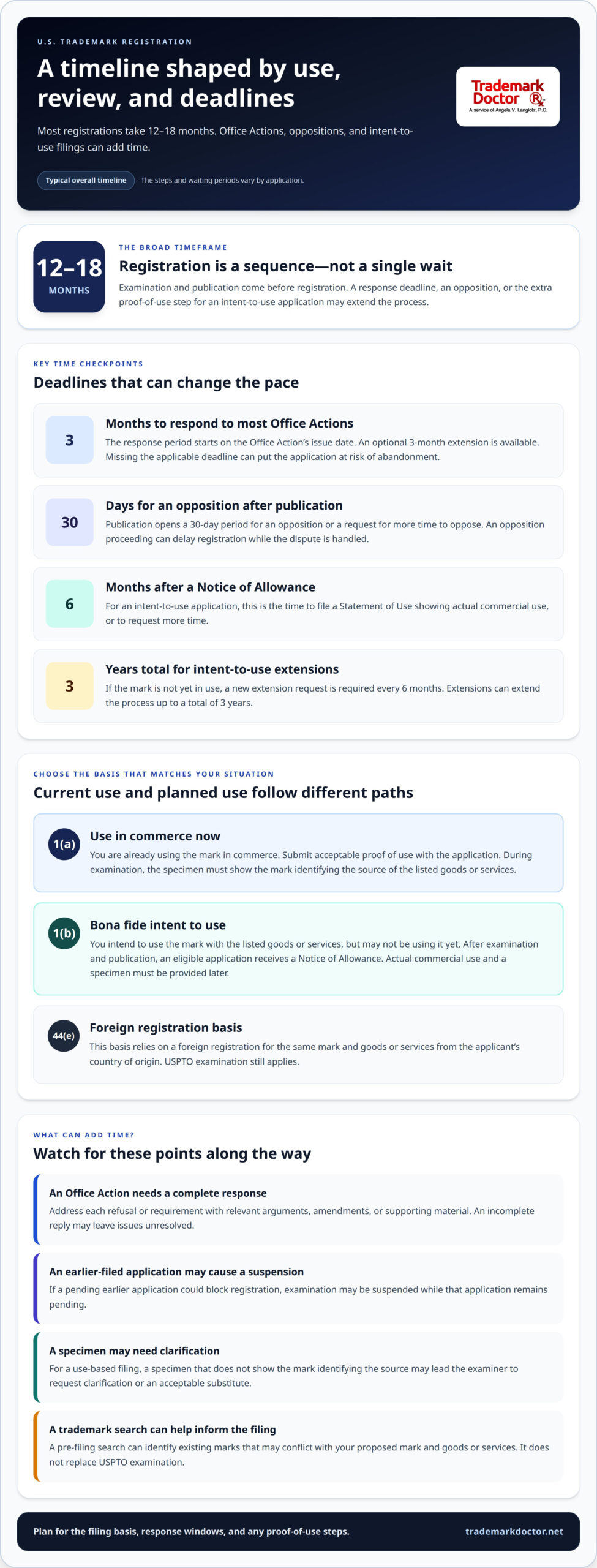
The U.S. trademark registration timeline is typically 12-18 months, though an Office Action, an opposition, or an intent-to-use filing can extend it. For most U.S. trademark applicants, the response deadline is three months from the Office Action’s issue date, according to the United States Patent and Trademark Office, and an optional three-month extension is available; missing the deadline can put the application at risk. Your filing basis also shapes what happens next: a Section 1(a) application is based on current use in commerce, while a Section 1(b) application is based on an intent to use the mark, and according to the United States Patent and Trademark Office, an intent-to-use applicant has six months after receiving a Notice of Allowance to file a Statement of Use. Here’s how the stages fit together, where deadlines can add time, and why the right filing basis matters when you’re planning for registration.
Key Takeaways
- Plan around your filing basis: an application based on current use follows a different path from one based on intent to use.
- If you’re not yet using the mark after a Notice of Allowance, the United States Patent and Trademark Office requires a new extension request every six months.
- Most U.S. applicants have 3 months from an Office Action’s issue date to respond, with an optional 3-month extension, according to the United States Patent and Trademark Office.
- Publication opens a 30-day period for an opposition or a request for more time to oppose, according to the United States Patent and Trademark Office; this stage can affect when registration follows.
Intent-to-use applications and Statements of Use
A Section 1(b) filing lets you apply before using your mark in commerce. The application must show a bona fide intent to use the mark with the listed goods or services. That choice affects the trademark registration timeline because approval does not immediately produce a registration. After examination and publication, the United States Patent and Trademark Office issues a Notice of Allowance for an eligible intent-to-use application.
The Notice of Allowance starts a separate deadline. After receiving it, an applicant has six months to file a Statement of Use documenting actual commercial use and providing a specimen that shows the mark used with the goods or services. If the mark is not yet in use, the USPTO requires a new extension request every six months.
A use-based application follows a different path. Under Section 1(a), you are already using the mark in commerce, and acceptable proof of use is submitted with the application. An examining attorney reviews the filing basis and specimen during examination. If the specimen does not show the mark identifying the source of the listed goods or services, the examiner may require clarification or an acceptable substitute, adding response time.
Section 44(e) provides another filing basis: the applicant owns a foreign registration for the same mark and goods or services from the applicant’s country of origin. This basis changes what supports the U.S. application; it does not remove examination. The examining attorney still reviews the application, and any refusal or earlier-filed conflicting application can affect progress.
If an earlier-filed application could block registration, the examining attorney may suspend examination while that application remains pending. The U.S. target from filing a new application to its first examining action is 5 months, as of November 5, 2026. A suspension can add waiting time beyond that stage.
How can a trademark professional check an application’s status and estimated USPTO processing times? They can review its TSDR record for status, correspondence, and deadlines, then compare its current stage with USPTO processing-time estimates. This helps distinguish routine waiting from a notice that requires action.
How long do I have to respond to an office action?
An Office Action identifies an issue the examining attorney found during the examination. The response deadline matters: missing it can prevent the application from continuing toward registration.
Office Action Response Deadlines and Fees
Most U.S. trademark applicants have 3 months from the issue date to respond to an office action, with an optional 3-month extension, according to the United States Patent and Trademark Office. The extension adds response time, but it does not change what the examiner needs addressed. A response should answer each refusal or requirement with relevant arguments, amendments, or supporting material. An incomplete reply can leave issues unresolved.
Deadlines for Avoiding Abandonment
To avoid abandonment, respond to an Office Action by the applicable deadline. If you need more time, request an available extension before the original deadline expires. Missing the deadline can cause the application to be abandoned, ending its progress toward a registration certificate. Track the issue date and each USPTO notice, and address every requirement in your response.
The first examining action is a separate wait. The wait for a first examining action can vary. Once the action arrives, its issue date starts the response period. An examining attorney may raise questions about the mark, the goods or services, or the evidence in the record. The response must address the specific points in that official notice.
How long is the USPTO publication period for opposition, and what happens if someone objects? According to the United States Patent and Trademark Office, publication opens a 30-day period for an opposition or a request for more time to oppose. An objection can lead to an opposition proceeding, delaying registration while the dispute is handled.
A prompt, focused response can keep an avoidable deadline problem from disrupting the application. If an examiner’s requirements need legal analysis, Office Action response support can help address the issues raised.
Use-in-commerce and intent-to-use filing bases
Your filing basis affects what evidence the application needs and what happens after approval. Under Section 1(a), you’re already using the mark in commerce, so acceptable proof of use accompanies the filing. Under Section 1(b), you have a bona fide intention to use the mark with the listed goods or services. That basis adds a later proof-of-use step before registration, which can lengthen the registration process.
For a Section 1(b) application, the United States Patent and Trademark Office issues a Notice of Allowance after approval and publication. You then need to submit a Statement of Use showing commercial use, or request more time while preparing to use the mark. Extensions can extend the process up to a total of three years. The choice matters: a business already selling products may have evidence ready, while a brand still preparing to launch needs time for actual use.
A pre-filing trademark search can help identify potential likelihood-of-confusion issues. It reviews existing marks that may conflict with your proposed mark and its goods or services. For example, a search may surface a similar mark before you invest in packaging or launch plans. It does not replace USPTO examination, but it can help inform your filing decision and the application’s scope.
Build maintenance into your long-term schedule, too. A U.S. registrant must file a Section 8 Declaration of Continued Use between years 5 and 6 after registration. According to the United States Patent and Trademark Office, registrants must file a combined Section 8 Declaration and Section 9 Renewal Application every 10 years. Missing a required maintenance filing can put an active registration at risk.
Choose a filing basis that matches the facts, not your hoped-for timeline. A use-based filing requires evidence of current use. An intent-to-use filing lets you apply before launch but requires proof of use later. These choices affect the trademark registration timeline, while USPTO reviews, refusals, and opposition proceedings can add further delays.
Typical U.S. trademark registration timeline
A federal trademark application commonly takes 12-18 months to complete, but that span is a planning range, not a fixed schedule. The application moves through filing, examination, publication, and final registration or further action. Each stage can shift if the examining attorney raises an issue or an opposition begins. Your filing basis also matters, especially if you haven’t begun commerce.
After the examining attorney approves an application, the mark advances to publication in the Official Gazette. Approved applications typically reach publication about 7-9 months after filing. According to the United States Patent and Trademark Office, publication opens a 30-day period for an opposition or a request for more time to oppose. This window gives a third party a chance to challenge the application before registration. An opposition can move the matter into a proceeding rather than routine processing.
If no opposition is filed, the next milestone depends on your filing basis. For an application based on current use in commerce, registration may follow publication. Processing commonly continues for about 2-3 months after publication. An intent-to-use application instead receives a Notice of Allowance, and registration waits for an acceptable Statement of Use showing use in commerce. That additional proof step means launch readiness can affect the end date.
An opposition can extend the estimate considerably: proceedings may take six months to more than a year to resolve. An Office Action, a suspension tied to an earlier pending application, or an incomplete statement can also add time. Estimate from the remaining milestones, not just the filing date. Identify the application’s current stage, open deadlines, and whether proof of use is still due. This gives you a practical picture of potential delays.
For help assessing the steps and deadlines in your application, get trademark application guidance.
Trademark Doctor
Trademark Doctor helps manage the application process, from an early name review through examination. If you’re planning a launch, its trademark availability evaluation can identify potential conflicts before filing. When you’re ready, Trademark Doctor can file the application for USPTO review and handle examination issues and Office Action responses.
The right time to seek help depends on your application’s stage. You may want guidance before filing to assess availability and choose a filing basis, or later if you receive an Office Action or need help tracking a deadline. Trademark Doctor also addresses online intellectual property issues that may affect your brand. For help with an application or pending issue, contact Trademark Doctor.
Keep your next brand decision on track
A realistic trademark registration timeline helps you plan a launch and make informed ownership decisions. Treat the application as an active business matter: assign responsibility for notices, preserve records of trademark use, and ensure important correspondence reaches someone who can act on it. These habits help you stay prepared as your brand develops.
Trademark Doctor evaluates trademark availability, files trademark applications, and responds to examination issues and Office Actions. This support can help whether you’re preparing to file or addressing a notice on a pending application. The next step depends on your mark’s status and what the USPTO has requested.
Contact Trademark Doctor about your trademark to discuss the application stage and the support you need. A clear plan helps you move forward with greater confidence as you build your brand.
Frequently Asked Questions
How long does a USPTO trademark usually take?
There is no fixed duration for every USPTO application. For a useful estimate, distinguish routine processing from time spent waiting for an applicant’s response or another procedural event. Review the latest dated entry in the application record and identify what must happen next. A status update alone does not mean the USPTO has granted registration.
How long does trademark registration take?
The time to receive a registration depends on the application’s remaining steps; only an issued registration certificate confirms that registration has been granted. For planning, consider the current case status and any outstanding action, not just the filing date. A pending application is not a registered mark, so do not describe it as federally registered before the certificate issues.
How long until my trademark is examined?
The examining attorney reviews an application after it enters the USPTO’s examination queue, but a general estimate cannot predict the exact review date. Keep the filing receipt and application serial number together. They help you find the correct application record and connect later correspondence to the right matter.
What is the trademark process, and how long does it take?
The process involves a sequence of USPTO decisions and applicant responses, not a single approval event. Keep the filing receipt, submitted goods and services, specimens, and official correspondence together in one case file. This record helps your attorney assess whether a later notice concerns the mark, the listed goods or services, or evidence, and what response may be needed.
When can I use the ® symbol?
You may use ® only after the mark is registered. Before then, do not use the symbol on product packaging, in advertising, or in a website footer to imply federal registration. A pending application does not authorize ®, even if you are already using the mark in commerce. Use the symbol only for the registered mark and the goods or services covered by its registration.
How long does USPTO trademark registration take in the United States?
There is no single completion date for every U.S. application. Check the application’s latest record entry to see whether the next step belongs to the USPTO, the applicant, or another party. This is general information only, provided “AS IS” without warranties; it is not individualized legal advice and does not create an attorney-client relationship. Retain an attorney for advice about your situation.