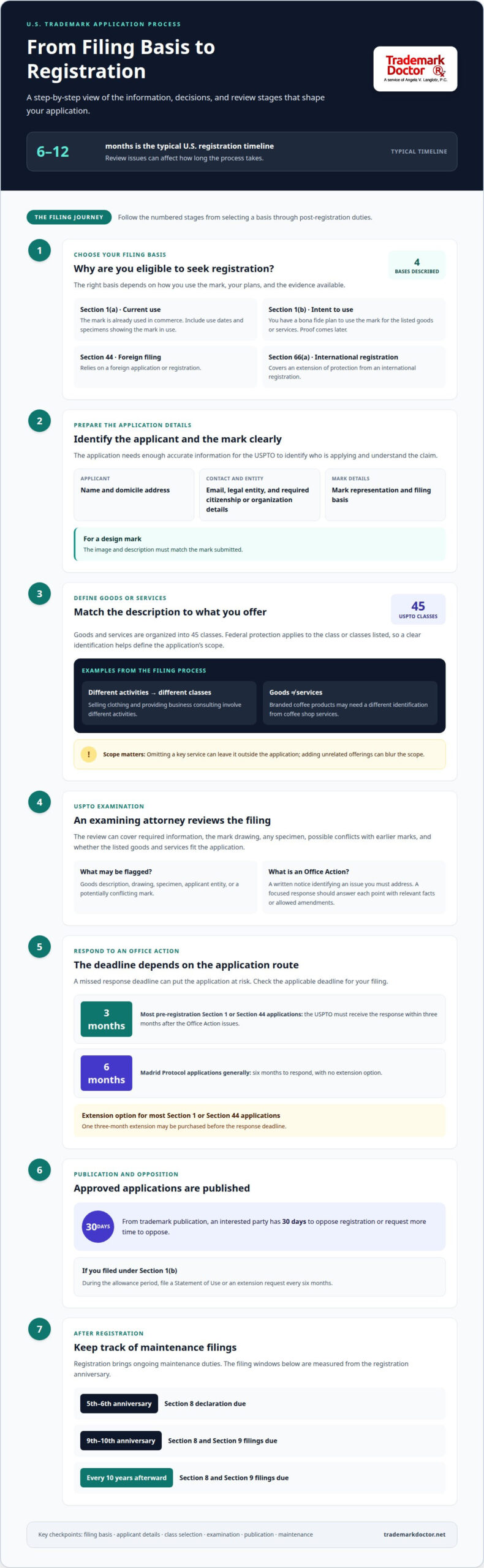
U.S. trademark application requirements include the applicant’s identifying details, a filing basis, a description of the goods or services, and the correct class or classes; according to the United States Patent and Trademark Office, goods and services are organized into 45 classes. You can apply based on current use or an intent to use the mark.
Filing the application is only the beginning. The USPTO reviews it, may issue an Office Action that requires a response, and publishes approved applications for possible opposition. Registration can therefore take longer than the initial filing stage.
This guide explains what information a professional prepares, how class selection affects an application, and what to expect from examination and publication; U.S. trademark registration typically takes 6 to 12 months, though issues during review can affect the timeline. You’ll have a clearer picture of the process, the decisions that shape it, and when professional filing support can help keep your application on track.
Key Takeaways
- A strong filing starts with accurate applicant details and a filing basis that matches your circumstances.
- Choose goods and services classes carefully; the classes listed shape the scope of federal protection.
- USPTO examination may raise issues that call for a focused Office Action response.
- Trademark Doctor can prepare and file your application, then help address examination issues as they arise.
How does a professional file a trademark application for you?
A trademark professional matches the filing basis to how you use the mark and your plans for it. They organize the application details and supporting materials before filing with the USPTO.
Available Filing Bases
A filing basis explains why you qualify to seek registration in the United States. A professional compares actual commerce, launch plans, and foreign registration details. Section 1(a) applies when the mark is already used in commerce. Section 1(b) covers a bona fide intent to use it. Section 44 relies on a foreign application or registration; Section 66(a) covers an extension of protection from an international registration. The right basis depends on your evidence and circumstances.
Intent and Proof of Use
Bona fide intent means a genuine plan to use the mark for the listed goods or services. To assess that plan, a professional reviews information such as product development, planned sales, and launch materials. For Section 1(a), the application needs use dates and specimens showing the mark in use. With Section 1(b), proof comes later. According to the United States Patent and Trademark Office, an applicant must file a Statement of Use or extension request every six months during the allowance period.
Preparing the Application
For a trademark application, a professional prepares the applicant’s name, domicile address, email, legal entity, and required citizenship or organization details. They also confirm the mark representation and filing basis. These requirements help the USPTO identify the applicant and understand the claim. For a design mark, the image and description must match the mark submitted.
After publication, an interested party has 30 days from trademark publication to oppose registration or request more time to oppose, according to the United States Patent and Trademark Office.
Registration brings ongoing maintenance duties. A Section 8 declaration is due between the fifth and sixth anniversaries. Section 8 and Section 9 filings are due between the ninth and tenth anniversaries, then every 10 years afterward.
Trademark classes and goods or services
The United States Patent and Trademark Office organizes goods and services into 45 trademark classes. Class selection and clear descriptions help define the scope your application seeks.
Goods and Services Classification
Classification assigns goods or services to the class that fits their nature. This matters because federal protection applies to the class or classes listed. One brand may need separate classes for distinct commercial activities. For example, selling clothing and providing business consulting involve different activities. A professional maps each offering to a suitable class rather than relying only on your company’s industry label.
Identifying Goods and Services
An identification is the application’s written description of the goods or services connected to your mark. The USPTO’s Trademark Center uses classifications and identifications selected from the ID Manual. A professional compares the wording with your actual offerings and clarifies it where needed. “Clothing” may be too broad for a business that sells only shirts. Precise wording helps align the class, application, and any specimen showing use.
How a trademark professional selects goods and services for your application
A professional builds the identification around what you offer and concrete expansion plans. These details define the application’s scope and help address trademark application requirements without claiming unrelated offerings. For instance, a company selling branded coffee may need a different identification from one providing coffee shop services. The professional also considers your intent and whether available class wording accurately describes each activity.
Choosing classes carefully makes the requested federal protection clear. Omitting a key service can leave that activity outside the application, while adding unrelated offerings can blur its scope. A focused identification gives the examiner a clearer record of the goods or services tied to your mark.
USPTO examination and Office Actions
Once the USPTO accepts your application for filing, an examining attorney reviews it before registration. The review checks required information, the mark drawing, any specimen, and possible conflicts with earlier marks. The examiner also considers whether your listed goods and services fit the application. Each class matters because the identification and supporting information associated with it are reviewed.
Applications with multiple classes can be more involved. For example, if your brand covers clothing and online retail services, you may identify goods and services in separate classes. Trademark Center uses entries from the ID Manual, while a free-form description may need additional review. The wording should match your business activity and how you use the mark. A clear description helps the USPTO assess the protection you seek without extending your application beyond its stated scope.
An Office Action is a written notice identifying an issue you must address. The USPTO may flag the goods description, drawing, specimen, applicant entity, or a potentially conflicting mark. Your response should address each point with relevant facts or amendments allowed by the rules. A vague reply may leave the examiner’s concern unresolved, so your response needs to address the specific issue raised.
For most pre-registration applications under Section 1 or Section 44, the USPTO must receive your response within three months after an Office Action issues. You may purchase one three-month extension before the response deadline. Madrid Protocol applications generally have six months to respond, with no extension option. Missing the applicable deadline can put your application at risk. A focused review of each action keeps your federal filing moving through examination.
Trademark application processing time
In the United States, trademark registration typically takes 6 to 12 months, but examination issues or opposition can extend the process. Plan around milestones, not a guaranteed finish date. The patent and trademark processes are separate; a United States Patent and Trademark Office filing concerns trademark rights, not patent protection.
The first major wait is examination. The average time from filing to the first examining action was 4.2 months, based on data updated August 10, 2026. The examining attorney reviews the application and may issue an Office Action. Your response deadline and the time needed to resolve objections then affect the schedule.
Application details also shape preparation and review. A standard character mark uses typed characters, while a design mark needs a drawing that accurately shows its appearance. A color claim or special design may require more detail. Clear application materials help the examiner understand which mark you want to register.
If the USPTO approves the application, publication adds another milestone. Interested parties have 30 days from trademark publication to oppose registration or request more time, according to the United States Patent and Trademark Office. An opposition can extend the timeline because the parties must address the dispute before registration proceeds.
After publication, a Certificate of Registration or Notice of Allowance is issued approximately three to four months later. That timing may change if the application requires additional examination or opposition proceedings. When planning a brand launch around federal registration, allow a year or longer and make room in your schedule for responses and publication review.
Trademark Doctor: Trademark application filing
Trademark Doctor handles trademark application filing for businesses seeking professional help preparing a federal application. This support can be useful before launch, when ownership, mark details, and planned offerings need to be organized for filing. You provide the relevant business and brand information, and a professional uses it to prepare the application for submission.
Before filing, a professional can evaluate whether a proposed mark may conflict with existing marks or other users. That review helps inform whether to proceed with the name and how to frame the application. A mark used for a podcast, for example, may relate to services as well as merchandise. The filing should describe the actual activities tied to the brand, rather than assume one description covers everything.
Trademark Doctor also handles USPTO examination and Office Action responses. If an examiner raises a concern, the response should address the specific issue in the application record. This may involve clarifying wording or responding to a refusal, depending on the examiner’s grounds. Clear records and focused replies matter because an application can pass through different examination stages before the USPTO decides whether to register the mark.
Professional filing support is useful when you need help defining the application’s scope, documenting use or intent, or responding to an examination issue. It does not guarantee registration; the USPTO makes that decision based on the application and applicable requirements. Trademark Doctor also handles Online Intellectual Property Issues, which may be relevant when a brand concern extends beyond filing.
To discuss your filing, call Trademark Doctor.
Frequently Asked Questions
How can a trademark professional determine which trademark class(es) to select?
A trademark professional maps each product or service you offer to the activity it represents. For example, selling branded merchandise differs from providing consulting, even when one business does both. The professional reviews your current offerings and concrete launch plans, then selects suitable classes and wording. This helps define the application’s intended scope without adding unrelated products you may never offer.
What happens after I apply for a trademark?
After the USPTO finds the minimum filing requirements are met, it assigns a serial number and sends the application for examination. An examining attorney reviews the mark and application record, and may issue an Office Action. If approved, the mark is published, creating an opportunity for an interested party to oppose or seek more time. According to the United States Patent and Trademark Office, that window is 30 days from publication.
Why Are Trademark Requirements Important?
Accurate application details define what your registration seeks to protect. If a business lists only products, for example, its application may not cover a separate service offered under the same mark. Clear ownership and use information also help the examiner assess the filing. Careful preparation creates a more useful record and reduces confusion about which activities the application covers.
What information and documents are required to file a U.S. trademark application?
A U.S. application identifies the applicant by name, domicile address, and email, and includes the correct legal entity details. Individual applicants provide citizenship; an organization provides its state or country of formation. The filing also requires a basis and mark information. Depending on the basis, a professional may need use dates and a specimen, or a digitized image and description for a design mark.
What types of trademarks can be registered with the USPTO?
The USPTO accepts applications for marks such as words, stylized designs, sounds, and motion. A mark must distinguish the source of goods or services; generic terms and names that merely describe offerings do not meet that standard. A word mark may use standard characters, while a logo or motion mark needs a drawing or other representation showing what you want registered.
How does a trademark professional choose the correct trademark class and describe goods or services?
A professional connects your actual business activities to the appropriate class, then drafts identifications that accurately describe the offerings tied to the mark. For a podcast brand, that may mean distinguishing the entertainment service from separately sold merchandise. The wording should identify the activity without claiming goods or services you do not plan to provide. This alignment keeps the application’s scope clear.