

To learn how to check trademark availability, look beyond exact matches. Similar names can raise concerns when they sound alike or cover related goods and services. A clear result for your precise spelling is not an all-clear.
Checking before you invest in a name is a sensible first step. A search can uncover potential conflicts before you file, but it cannot guarantee registration or rule out every claim to a mark.
This guide explains why similar marks matter, how to compare spelling and sound, and how the goods and services associated with a mark shape the assessment. It also explains how a professional review can help you interpret results before committing to a brand.
Key Takeaways
- Search beyond exact name matches; similar marks can create conflicts even when their spelling differs.
- Compare how names look and sound to spot similarities a basic text search may miss.
- Assess the goods and services connected to each mark, since the same or similar name may be used in different markets.
- Use professional review to interpret search results and understand potential risks before committing to a brand name.
Why run a search for similar trademarks?
A clearance search looks for existing marks that could complicate your planned name or logo. A professional can explain how to check trademark availability before you invest in branding or file an application. The search scope depends on the mark, logo, goods, services, and intended market.
Trademark Search Tool Coverage
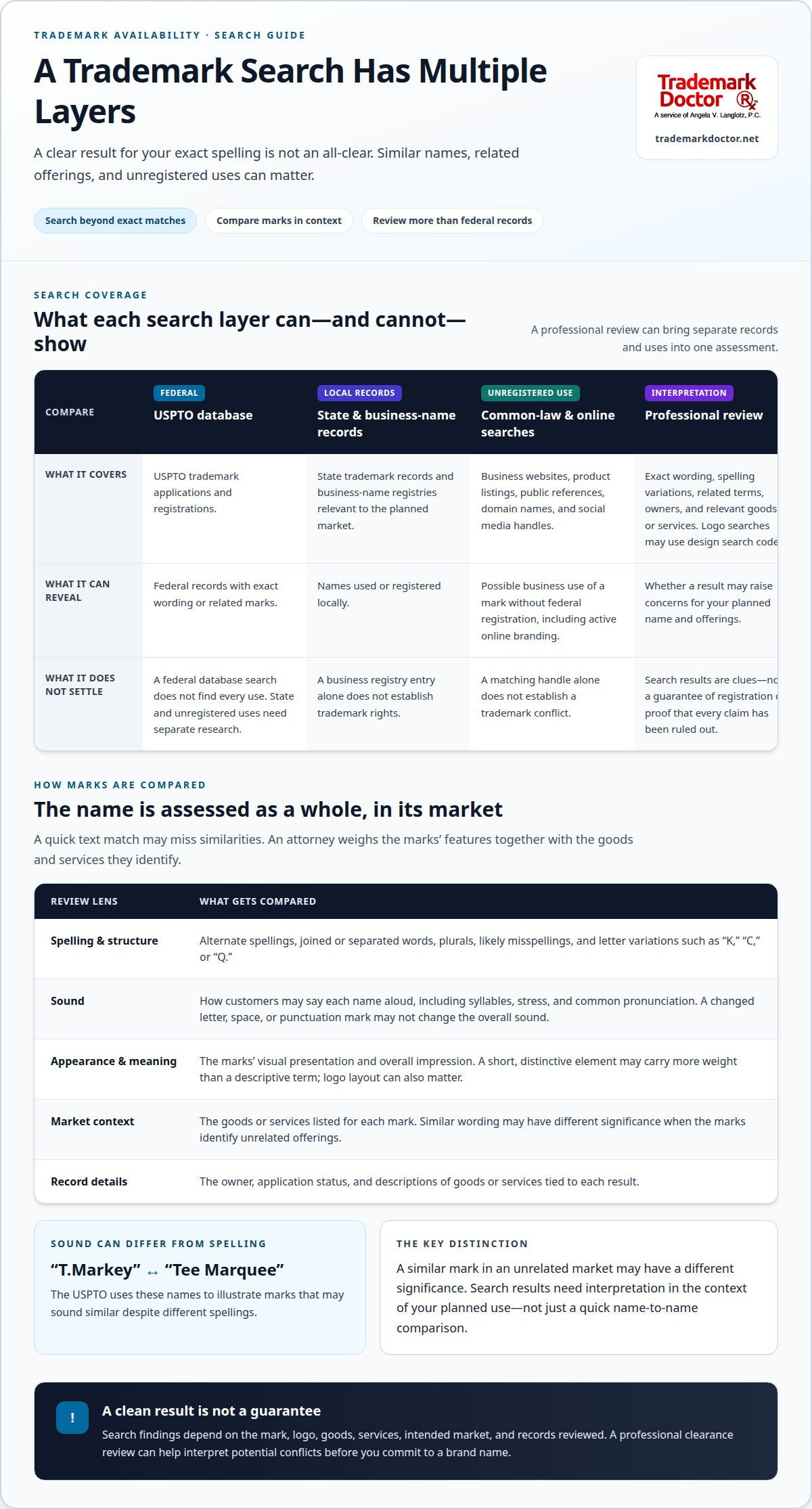
A trademark search tool searches records in the USPTO database. It can reveal registered marks and pending applications, but it doesn’t find every use.
A professional trademark search lawyer can cover exact wording, spelling variations, related terms, owners, and relevant goods or services. For a logo, design search codes can help locate similar visual elements. The federal database is only one part of the review. State records, business name registries, and unregistered uses require separate research.
A professional also searches state trademark databases and business name registries relevant to your planned market. These searches can reveal names used or registered locally, though a business registry entry alone does not establish trademark rights.
Search Results and Potential Conflicts
A potential conflict is a mark similar enough to raise concerns for related goods or services. An attorney evaluates how the marks look, sound, and read in context.
For example, “T.Markey” and “Tee Marquee” may sound alike despite different spellings. An attorney reviews each result’s owner, application status, and listed goods or services. A similar mark in an unrelated market may have a different significance. Search results need legal interpretation, not just a quick comparison.
State, Common-Law, and Online Searches
Common-law use means a business uses a mark without federal registration. Professionals search online for such use through company websites, product listings, and public references. They can also check domain names and social media handles for similar branding. These results can reveal active uses, but a matching handle alone does not establish a trademark conflict.
Consider hiring a trademark attorney before filing if close results appear or the name will anchor a new brand. A professional trademark conflict search can interpret findings in light of your planned offerings and help you assess the next step.
How a trademark attorney identifies similar-sounding and similarly spelled marks
A phonetic search finds marks that sound alike despite different spellings. An attorney pairs sound-based searches with spelling variations to uncover matches an exact-name query could miss.
For example, the USPTO uses “T.Markey” and “Tee Marquee” to illustrate names that may sound similar. An attorney considers how customers might say each name aloud, including its syllables, stress, and common pronunciation. Changing one letter may not change the overall sound. Nor does a space or punctuation mark necessarily make two names distinct.
Spelling searches examine more than the proposed name as typed. An attorney can test alternate spellings, joined or separated words, plural forms, and likely misspellings. These searches can surface similar marks that use different letter combinations but still look or sound alike. For example, a name with a “K” might prompt a search using “C” or “Q.”
Next, the attorney compares the overall impression each mark creates. A shared word may matter less if the remaining wording changes how buyers understand the name. A short, distinctive element can carry more weight than a descriptive term. Visual layout also matters when the application includes a logo rather than a wordmark alone.
Search results are considered alongside their listed goods and services. The same or similar wording can have different significance when marks identify unrelated offerings. An attorney checks record details, including the owner, application status, and descriptions, before assessing whether a result raises concerns for your planned use.
Official database matches are clues, not a decision by themselves. The attorney weighs sound, spelling, appearance, meaning, and commercial context together. If a close result appears, you can discuss its relevance through a professional trademark clearance review before settling on the name.
How to Check Availability Before Choosing a Name
To understand how to check trademark availability, start by considering which records and search terms are included. A trademark availability search checks whether existing marks may conflict with a proposed name. Its findings depend on how the results relate to your planned goods or services.
A federal database is a searchable record of trademark applications and registrations. The USPTO provides a tool to search its records, which can reveal exact wording and related marks. A basic online search can be completed instantly, but a clean result addresses only the records and search terms reviewed. It does not establish that no one else uses a similar name.
A state trademark database records marks filed within a particular state. A business name registry records organization names, which do not necessarily carry trademark rights. A professional search can check relevant state and business registries, then compare similar names with your business activity. A registered organization name alone does not settle whether a proposed brand conflicts with another mark.
Common-law use means someone uses a mark in business without federal registration. An online search can find examples on business websites, product pages, and public listings. Domain names and social media handles can reveal active use, but an available handle does not prove that a name is clear to use as a trademark.
How long does a search take? A basic online search may be instant, while a detailed professional search and legal opinion may take 1-2 days. The search scope, mark format, and goods or services affect the work involved.
Does a federal search cover every conflict? No. The USPTO database can identify federal records, but state and unregistered uses require separate research. That distinction matters when a business uses a name locally without applying for federal registration.
Before choosing a name, define the wording, logo, and goods or services you plan to use. Then assess federal, state, and online results together. A registration search is one checkpoint, not a complete answer about every organization using similar branding.
Search each relevant state’s trademark database for marks filed there, and its business name registry for organization names. Compare exact and similar names with your planned goods or services, since a business registration alone does not establish trademark clearance.
How a trademark attorney checks whether a trademark is confusingly similar to another mark
Confusing similarity means two marks may lead people to assume their goods or services come from the same source. An attorney compares the marks as a whole, then considers what each identifies. A small spelling change alone may not distinguish names if customers pronounce or remember them similarly.
The comparison considers appearance, sound, meaning, and overall impression. For example, “T.Markey” and “Tee Marquee” are spelled differently but may sound alike. An attorney examines syllables, word order, shared terms, and likely pronunciation. A logo adds visual elements, such as a dominant word or design, to assess alongside its wording.
Goods and services put the comparison in context. Identical names can appear in unrelated markets, as with Delta faucets and Delta airlines. But similar marks connected to related offerings may raise greater concerns. An attorney reviews the goods and services descriptions in each record, then considers whether buyers could associate the offerings.
Customer perception also matters. An attorney considers how people encounter and remember the names, including whether they see them together or hear them spoken. A shared descriptive word may carry less weight than a distinctive element. Conversely, different logos may not settle the issue if the spoken names remain similar.
The review weighs these points together rather than treating one matching letter or phrase as decisive. An attorney also examines application and registration records for the status and scope of a potentially relevant mark. This analysis helps distinguish a remote resemblance from a result that deserves closer attention before you choose a name.
If a close result could affect your planned brand, request a trademark availability evaluation to discuss the search findings and their relevance.
Trademark Doctor: Trademark availability evaluation
Trademark Doctor provides trademark availability evaluations to help you assess potential conflicts before choosing a name or preparing an application. Turn to this review when search results include similar marks or when you need to understand how your planned goods and services affect the assessment. The evaluation can clarify what the results mean for your brand decision. If you decide to proceed, Trademark Doctor also handles trademark application filing and responds to examination issues, including Office Actions. These services can support your effort to protect a valuable brand, but registration is not automatic. If you are preparing to launch a name, contact Trademark Doctor to discuss a trademark availability evaluation.
Make your next brand decision with care
A name becomes part of your business’s public identity when you put it on a product, website, or campaign. Knowing how to check trademark availability can give you clearer information for that decision, but you still need to weigh your plans, audience, and brand direction.
Trademark Doctor offers availability evaluations, application filing, and examination and Office Action responses, helping you move from assessing a name to addressing issues that arise during registration. Attorney Angela Langlotz brings experience marketing products online to the legal work of protecting business brands. The right next step depends on whether you are assessing a name, preparing an application, or responding to an Office Action.
Protect your brand before committing to a launch. Contact Trademark Doctor for help with your trademark plans, and take the next step with a clearer view of your options.
Frequently Asked Questions
How can a trademark attorney verify whether a name is available to trademark?
Share the exact name you want to use, any alternatives, and a plain-language description of your planned products or services. If you have a logo, provide the version you intend to launch. These details help the attorney assess the proposed brand as you plan to present it, in the context of its intended business use.
How does a trademark attorney check trademarks?
An attorney can organize potentially relevant records into a written assessment, distinguishing stronger leads from results that appear less relevant to your plans. If a result needs closer attention, the assessment can identify the record and explain the issue in practical terms. This gives you a clearer basis for deciding whether to keep the name, revise it, or pause before filing.
How can a trademark attorney check whether a brand name is taken?
“Taken” is not a simple yes-or-no status: a business may use a name while another party owns a registration for a different purpose. Tell the attorney how you plan to display the name, such as on packaging, in an app, or as a company-facing brand. That context helps focus the assessment on the brand decision you face.
How does a professional phonetic search identify similar trademarks?
A phonetic review considers how a name sounds when people say it quickly or hear it in conversation. The attorney may examine where syllables meet, which sounds disappear in casual speech, and which parts listeners are likely to remember. This can matter for names used in audio ads or spoken recommendations, where customers may not see the spelling first.
Why might you need to search beyond exact matches in the USPTO database?
An exact-wording search can miss a mark that conveys the same idea using different words. For example, a proposed English name may have a close equivalent in another language, or an abbreviation may stand for the same phrase. Tell the attorney about intended translations, shorthand, or alternate versions so the review can consider how customers might understand the full brand.
How does a trademark attorney search the USPTO trademark database for existing trademarks?
The attorney can use the proposed wording to locate records, then open relevant entries and examine their details. A serial or registration number identifies a specific file, while the mark drawing shows the wording or design in that record. Reviewing the underlying entry rather than relying only on a results list adds useful detail to the assessment.