
Yes, someone can oppose your trademark: according to the United States Patent and Trademark Office, parties who believe registration may harm them have 30 days after publication to oppose or request more time. That makes publication more than a routine milestone in the trademark application process; it opens a formal window for others to challenge the application.
The timeline depends partly on your filing basis and whether the examining attorney raises issues that require a response. If you file based on intent to use, you must also submit proof of use before registration can be completed.
This guide follows the trademark application process from filing and examination through use documents, publication, and possible opposition. It explains what happens at each stage and where accurate preparation can help keep the application on track.
Key Takeaways
- Choose an application basis that matches your current use of the mark or your genuine plans to use it.
- An Office Action needs a targeted response to the examiner’s stated concerns, not a generic reply.
- If you file based on intent to use, plan how you’ll document use before registration can be completed.
- Publication opens the door to third-party challenges, so understand what an opposition could mean for your application.
Having a professional file a statement of use or amendment to allege use
A complete USPTO application identifies the owner, the mark, and the goods or services. Include the required mark image or sound file and filing basis. For a use-based filing, provide a specimen showing the mark in commerce.
- Have the professional define the goods and services before filing. This description sets the scope of the requested registration. Match each item to your actual business plans. A seller already offering branded products may document current use; a founder preparing a launch may have intent to use.
- Choose the filing basis that matches the facts. A use-based application needs a specimen showing the mark in commerce, such as on goods, packaging, a point-of-sale display, or service advertising. An intent-to-use filing requires a genuine plan for every listed item. After a Notice of Allowance, submit a Statement of Use with specimens or request an extension. Before that notice issues, an Amendment to Allege Use may report qualifying use.
- Ask whether a foreign filing basis fits. Section 44 may rely on an application or registration in your country of origin. Section 66(a) covers an extension of protection from a WIPO International Registration. Provide those foreign records so the professional can assess the route and supporting details.
- Keep the filing receipt and application serial number. Once minimum filing requirements are met, the USPTO assigns a serial number. Application details should appear on the USPTO website within 14 days after filing. Use the record to follow status changes and examination notices, then route each notice promptly to the professional handling the application.
- Plan for maintenance after registration. According to the United States Patent and Trademark Office, Section 8 maintenance filings are due between the fifth and sixth year after registration. U.S. trademark registrations require renewals every 10 years, according to the United States Patent and Trademark Office. Section 8 and Section 9 maintenance filings are also due between the ninth and 10th year after registration. Keep use evidence and ownership details organized for those filings.
What is an Office Action?
A USPTO examining attorney reviews the application for legal and filing issues, including conflicts with existing marks. Common refusal grounds include a likelihood of confusion and wording that merely describes the goods or services.
-
Have a professional review the Office Action
Have a professional review the official notice and identify each issue before preparing a response. The examining attorney may flag conflicting marks, descriptive wording, application details, or problems with the mark drawing or specimen. Read every section carefully. A refusal can require legal arguments, while a request for clarification may call for a precise amendment. The right response depends on the specific grounds stated.
-
Have a professional prepare an applicant response
Ask a professional to connect each response point to the examiner’s stated concern. For a likelihood-of-confusion refusal, the analysis may consider the marks and the goods or services listed. For a specimen issue, the evidence must address how the mark identifies the source of those goods or services. Avoid broad claims that don’t answer the official notice. A focused response gives the USPTO a clear record to examine.
- Track the deadline from the Office Action’s mailing date, then plan the response around that date. For Office Actions dated after December 4, 2022, the United States Patent and Trademark Office allows applicants 3 months to respond to a rejection. Missing the applicable deadline can abandon the application, so don’t let an electronic notice sit unattended. A professional can assess whether to submit arguments, amend the application, or consider an appeal when available. Each choice affects the application’s permanent record and the intellectual property rights you’re seeking.
Gather the application record, relevant specimens, and facts about your mark’s use. Then arrange professional Office Action response support to address the examiner’s specific concerns.
Use-based and intent-to-use application bases
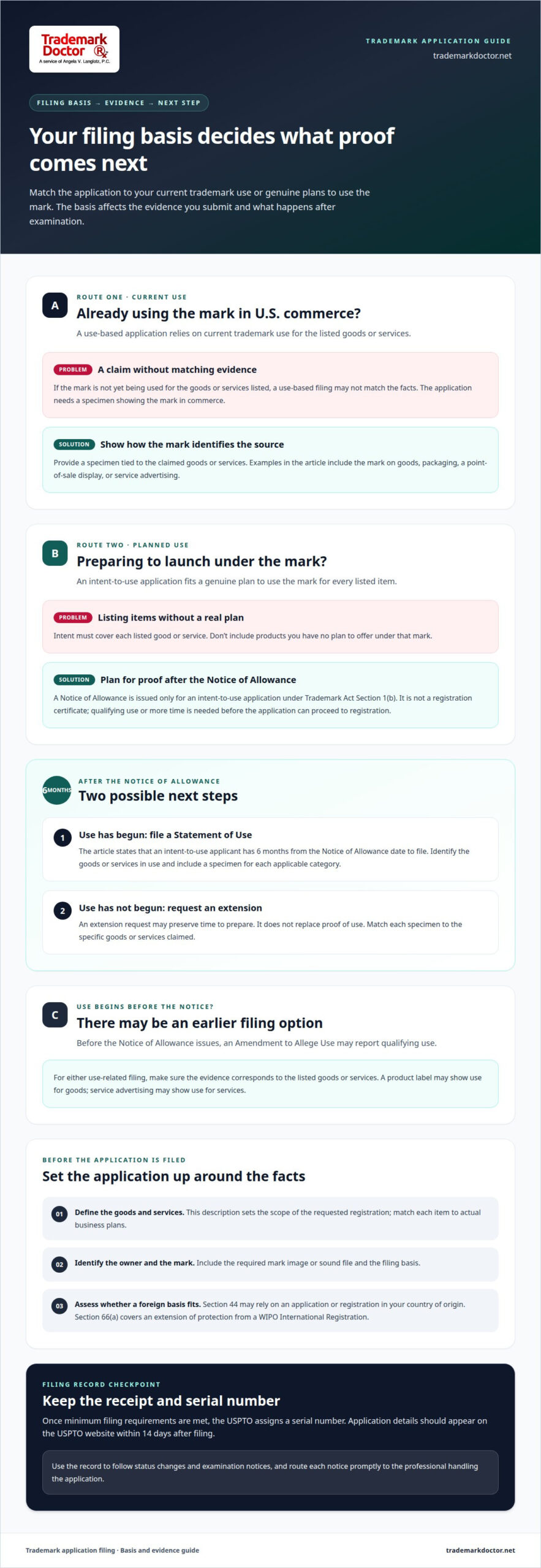
Choose a filing basis that matches the mark’s actual use or your genuine plans to use it. The choice determines what evidence the application needs and what happens after examination.
-
Have a professional identify an intent-to-use basis
Ask a professional to determine whether you already use the mark in U.S. commerce or genuinely intend to use it. A use-based application relies on current trademark use and requires a specimen showing the mark in commerce. An intent-to-use application fits a planned launch, but your bona fide intent must cover every listed good or service. Don’t list products you have no plan to offer under that mark.
-
Receive a Notice of Allowance
Track the application after approval and watch for a Notice of Allowance. According to the United States Patent and Trademark Office, this notice is issued only for an application filed on an intent-to-use basis under Trademark Act Section 1(b). It is not a registration certificate. It marks the next stage: you must establish qualifying use or request more time before the application can proceed to registration.
-
Have a professional file a statement of use
Arrange a Statement of Use once the mark is being used in commerce for the listed goods or services. According to the United States Patent and Trademark Office, an intent-to-use applicant has 6 months from the Notice of Allowance date to file it. The filing identifies the goods or services in use and includes a specimen for each applicable category. If use has not begun, an extension request may preserve time to prepare, but it does not replace proof of use.
Match each specimen to the specific goods or services claimed. A product label may show use for goods, while service advertising may show use for services. If only some listed items are in use, the filing should reflect that distinction rather than imply broader use. Keep the evidence and application details aligned: a mismatch can prompt another USPTO issue and delay registration.
Publication in the Trademark Official Gazette
After the examining attorney approves an application, the USPTO publishes it in the Trademark Official Gazette. Publication is a key checkpoint in the trademark application process. Hiring a trademark attorney can help you assess risks and prepare for a challenge; applicants domiciled outside the United States must be represented by an attorney before the USPTO.
- Watch for the Notice of Publication and record its date. The USPTO publishes approved marks in its weekly electronic gazette. Publication gives others an opportunity to review the mark and decide whether registration could affect their rights. It is a review period, not a registration certificate, so continue monitoring the application record.
- Track the opposition deadline from the publication date. According to the United States Patent and Trademark Office, parties who believe registration may damage them have 30 days after publication to oppose registration or request more time to oppose. A business with an earlier mark for related goods or services, for example, may consider whether the proposed registration conflicts with its rights.
- Discuss any challenge with an attorney before choosing a response. An opposition proceeding is a trademark dispute before the TTAB following an opposition filing. The opposing party may argue that the marks or the goods and services create a conflict. Review the asserted rights, application record, and requested outcome. An opposition is not an examining attorney’s refusal: the stages and responses differ. This distinction matters as you manage the trademark application process.
- Monitor the USPTO record after the publication period. If no opposition or extension request is filed, an application based on use in commerce may proceed to registration, subject to remaining requirements. An intent-to-use application still needs its use filing. Publication is a checkpoint, not the finish line, in the trademark application process. For help assessing this stage, consider professional trademark application support.
Trademark Doctor: Trademark application filing
Trademark Doctor supports applications from mark evaluation through filing and examination. Turn to the firm for help assessing a proposed mark’s availability, preparing a filing that reflects your goods or services, or responding to an Office Action.
A strong application starts with accurate ownership details, a suitable filing basis, and clear descriptions of the goods or services you want covered. Examination can raise separate issues, so a response should address the examiner’s specific concerns rather than rely on a generic explanation. Trademark Doctor provides application filing, availability evaluation, and examination and Office Action responses to support these stages.
Ready to discuss your application? Contact Trademark Doctor.
Put your next brand decision on solid footing
A trademark filing is more than a form submission. It creates a record tied to the mark, its owner, and the goods or services named in the application. Keep future product launches and brand changes aligned with that scope, and seek legal advice before a change creates uncertainty about what the registration covers. A deliberate next step can help protect the commercial identity you are building.
Trademark Doctor provides trademark availability evaluation, application filing, and examination and Office Action responses. Its team has experience handling trademark applications and can help assess your mark and prepare for the next stage of the process in light of your business plans and application details.
Contact Trademark Doctor for help with your trademark application. A clear plan can help you move forward with greater confidence.
Frequently Asked Questions
Can someone oppose my trademark?
Yes. According to the United States Patent and Trademark Office, someone who believes registration may damage them has 30 days after publication to oppose or request more time. For example, a business with an earlier mark covering related products may raise a conflict. An opposition is a formal dispute, not an examiner’s refusal, so the issues and response strategy differ.
How long does the trademark process take?
Plan for a process that can take 12 months or more. An application with no Office Actions or oppositions may take 10 to 14 months from filing to registration. Examination timing, applicant responses, third-party challenges, and any required use filings can affect the schedule. An intent-to-use application may need additional time after publication before it qualifies for registration.
What is the difference between “use” and “intent-to-use” applications?
A use-based application states that you already use the mark in U.S. commerce for the listed goods or services. An intent-to-use application is for a mark you genuinely plan to use but have not yet launched. For example, a company preparing a product release may apply before sales begin, then submit proof of qualifying use to complete registration.
When can I use the ® symbol?
You can use ® only after the USPTO officially registers the mark. A pending application, a Notice of Allowance, or an unregistered common law trademark does not qualify. Before registration, businesses often use ™ with a mark for goods or ℠ for services, but these symbols do not mean the USPTO has registered the mark.
What steps does a professional take to apply for a trademark in the United States?
A trademark professional evaluates the proposed mark, identifies its owner and goods or services, selects a filing basis, and prepares the application and supporting evidence. The professional then files it and monitors USPTO examination notices. Trademark Doctor’s website content is general information only, not individualized legal advice, and is provided “AS IS” without warranties of merchantability, fitness for a particular purpose, or non-infringement. Retain an attorney for advice specific to your circumstances.
How can a professional search the USPTO trademark database before applying?
A professional searches the USPTO database for marks that may conflict with your proposed mark, including similar wording and related goods or services. The review can also extend beyond the federal database to online use by businesses that may have common law rights. For example, a similar name used by a local service provider could matter even without a federal registration.