

A trademark availability search helps you identify identical and similar marks that could create conflicts before you file. But a federal database result is only one part of the picture: it does not cover state registrations, unregistered common-law uses, or trademark registers in other countries. A name that looks clear at first may still raise concerns when you compare how marks sound, look, or convey meaning, consider the goods and services they cover, and check whether a record is live, pending, or dead. The goal is not to treat every similar result as a stop sign, but to understand what the records show, what they leave out, and how that information should shape your filing decision. This guide explains how to find and filter similar US marks, interpret their coverage and status, recognize the limits of a federal search, and assess your next steps before filing.
Key Takeaways
- Search beyond exact-name matches to spot similar marks that could affect your filing decision.
- Filter results by status, goods and services, owner, and matching method to focus your review.
- Recognize that federal records don’t capture every state, common-law, or international right.
- Use search findings as pre-filing guidance, and consider a professional evaluation when the results raise questions.
Why run a search for similar trademarks?
A federal database search can reveal potential conflicts before you invest in a name. A trademark availability search should look beyond exact matches.
Federal and Common-Law Search
The USPTO’s federal trademark database is a starting point, not the whole picture. Search exact names and close variations, then review results for similar wording, related goods or services, and ownership. A clearance review also considers state records and common-law use, meaning marks used in commerce without federal registration. Business names, websites, and marketplace listings can reveal users the federal register does not show.
Follow a practical sequence: search the federal register, identify relevant variations, and investigate whether similar names appear in commercial use. For example, a result for “Northstar” deserves closer review if your planned mark is “North Star” for related products. An exact-match search alone cannot establish that no similar mark exists.
Confusing Similarity Under U.S. Law
Two trademarks may be confusingly similar when their sound, appearance, or meaning resembles one another and their goods or services are related. The comparison considers each mark as a whole, not just whether every letter matches.
Consider the commercial context alongside the words. “Bright Path” and “BrightPaths” may warrant review if they identify related services, while identical wording used for unrelated goods may present a different picture. No single search result settles the question.
Free exact-match searches can help you catch obvious federal conflicts. They are useful for an initial screen, but may miss spelling, sound, or wording variations. Search likely alternatives, including different spacing and plural forms, then open relevant records and review their listed goods and services.
The USPTO retired TESS in 2023 and replaced it with Trademark Search. Use the current federal database to review matching records and their status. A dead record can still signal that someone contested the name before, so treat it as a research lead rather than an automatic green light.
Filtering results by status, class, owner, and matching mode
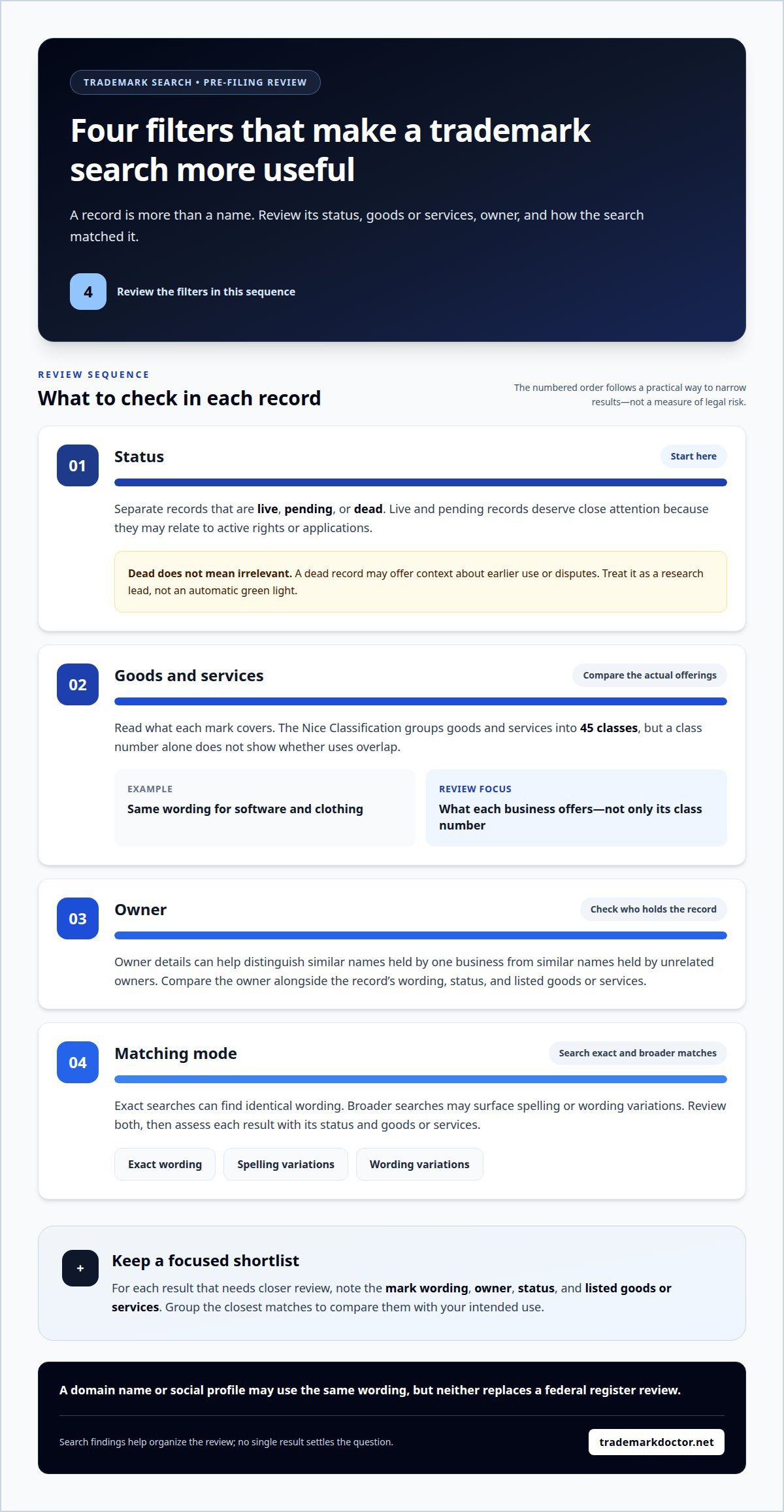
Once you have a list of possible matches, narrow it with filters that show which records deserve closer review. A USPTO trademark record contains more than the mark’s wording, including its status, owner, and goods or services.
Start with status. Status filters can help you separate records that remain active, are awaiting a decision, or are no longer live. Live and pending records deserve close attention because they may relate to active rights or applications. A dead record is not automatically irrelevant; its history may provide context about earlier use or disputes. Compare the owner and record details before deciding whether a match matters.
Next, compare the listed goods and services. The Nice Classification system groups them into 45 classes. A single name may belong to different owners in different classes, so a matching word alone doesn’t tell you whether the uses overlap. For example, a mark for software and the same wording for clothing may need different analysis. Focus on what each business offers, not only its class number.
Owner filters can help distinguish records held by one business from similar names held by unrelated owners. Matching mode also affects the results: exact searches can find identical wording, while broader searches may surface spelling or wording variations. Review both, then assess each result alongside its goods, services, and status. A domain name or social profile may use the same wording, but neither replaces a federal register review.
As you filter, keep a short working list of records that need closer attention. Note each mark’s wording, owner, status, and listed goods or services, then group the closest matches for comparison. This makes it easier to see which records may affect your intended use and which seem less relevant. A focused shortlist also helps organize the questions to resolve before deciding how to proceed with clearance.
If the filters leave you weighing close matches, a focused clearance review can help put the records in context.
Does it cover state trademarks or marks outside the US?
A search of the US federal trademark register covers federal records, not every source of rights. It does not cover state registrations, unregistered common-law marks, or other countries’ registers. A federal result may therefore look clear even when a business uses similar wording in commerce or another country has a relevant registration.
To consider state and common-law coverage, expand your review beyond federal records. Search state trademark records for places where you operate or plan to sell. Then look for businesses using similar trademarks in commerce, including names on websites, online marketplaces, and social media. A company may use a mark without appearing in the federal database, so a federal search alone will not identify every potentially relevant user.
To check a domain, social media, and common-law use, search the proposed name and close variations in domain records, search engines, and major social platforms. Review business websites and listings for the owner, products or services, and locations connected to each use. For example, a similar name on a local service business’s site may deserve attention if your planned services overlap.
Keep your findings organized. Record the name, source, apparent owner, goods or services, and location for each relevant result. A pending federal application is one record to assess, but it will not reveal every unregistered use or state trademark. Comparing those details helps distinguish a remote name match from a use that may matter to your plans.
International coverage requires a separate search of the relevant country’s register. A US federal search does not cover Canada’s or another country’s records. If your business plans to sell abroad, identify the target markets and search those jurisdictions, then compare the marks and goods or services listed there. A US result cannot establish that a name is available internationally.
Treat each source as a separate part of the clearance picture: federal records, state registrations, common-law use, and international registers. Reviewing them together gives you a clearer basis for deciding whether to proceed, revise the name, or investigate a particular result further.
Trademark search as part of pre-filing guidance
Search results should shape your trademark application process, not sit in a spreadsheet without context. Before committing to a name, connect each relevant record to your planned mark, goods or services, and launch plans. A registered mark and a pending application can raise different questions, so review each record’s status and listed coverage. Then decide whether to proceed with the name, revise it, or investigate a potential conflict further.
For a similar registered or pending mark, save the record and compare its wording, owner, status, and goods or services with your plans. Note what makes the names alike and how their commercial uses differ. A wordmark search will not identify logos or stylized artwork by image, so consider visual elements separately if your brand includes a design. USPTO handouts cover search basics, field tags, and field-tag searches using regular expressions.
After finding a close result, pause before filing. A trademark attorney can assess the record in context and explain how the comparison affects your proposed application. This is especially useful when the marks share key wording, the goods or services appear related, or your launch plans depend on the name. Search results inform the decision; they do not make it for you.
When should you hire an attorney? Consult one before filing if close registered or pending marks leave you unsure whether to keep, revise, or abandon the name. Early review can help you weigh the search findings against your intended use and application details before building more business activity around the mark.
A careful pre-filing review also separates name clearance from logo review and filing strategy. Request trademark availability guidance to assess relevant results and plan your next filing step.
Trademark Doctor: Trademark availability evaluation
Trademark Doctor provides trademark availability evaluations when similar records make your filing decision less straightforward. An evaluation can help you understand how the marks, owners, and listed goods or services compare, so you can decide whether to proceed with the name or consider another direction.
If you move forward, Trademark Doctor also handles trademark application filing and can assist with trademark examination and Office Action responses. This provides a path from evaluating search results to addressing issues that arise during examination, without treating registration as automatic.
Consider an evaluation before filing if a close registered or pending mark raises questions about your planned use. Clear search findings can also help you make a more informed filing decision.
Contact Trademark Doctor to discuss your trademark availability evaluation.
Put your next brand decision on firm footing
Your next step is to make a deliberate choice about the name you are building around. A trademark availability search can inform that decision, but the business context matters too: consider how the mark fits your products, marketing plans, and future growth. If the evidence points toward a change, addressing it early can help you avoid further investment in a name that raises concerns.
Trademark Doctor can help move you from evaluation to the next stage, whether that means filing a trademark application or responding to an Office Action during examination. The team has experience filing hundreds of trademark registrations. The right support depends on where you are in the process and what the records show.
For help deciding how to proceed, contact Trademark Doctor. A clear next step can help you protect the brand you’re working to build.
Frequently Asked Questions
Why you may need to search more than just exact matches with the USPTO?
An exact-wording search can miss marks that sound alike or create a similar overall impression. For example, “Kwick Klean” and “QuickClean” differ in spelling but may still deserve review for related cleaning services. Search alternate spellings, joined or separated words, and likely pronunciations. A result’s relevance depends on the mark and its commercial context, not just whether the letters match exactly.
Can you look up a trademark by owner or serial number?
Yes. In the USPTO’s Trademark Search, an owner name can help locate records connected to a business or individual, while a serial number can take you to a specific application. Owner names may appear in different forms, so try the company name and any known legal name. If you have a serial number from correspondence or a record, use it to review that filing.
Does it look up wordmarks or logos?
A wordmark search looks for text, not the visual content of a logo. If your brand includes a symbol, distinctive lettering, or a graphic, assess those design features separately from the wording. For example, a search for “Pine & Peak” will not identify every logo that uses a mountain image. Keep a clear copy of the design you plan to use for a focused review.
How can you verify the ability to trademark a name?
No single search result confirms that a name can be registered. First define the exact wording and the goods or services you plan to identify. Then assess whether the name can distinguish your offerings and whether earlier marks or uses raise concerns. If you are weighing a close result, an attorney can evaluate the specific mark and proposed use before you commit to filing.
How current is the trademark data?
Trademark records can change as applications move through examination, registration, or other case events. Treat search results as a snapshot of the available records, not a permanent answer. Before filing, reopen important records and review their latest status and documents. If you saved a search earlier, run it again before relying on the results for a new business decision.
How do you check if a name is already trademarked?
A trademark availability search starts with the proposed name, but the goods or services matter too. Search the exact wording and variations, then note relevant record numbers and owners for follow-up. Also look for the name where customers encounter brands, such as product listings and business websites. This gives you a more useful picture than a quick exact-name lookup alone.